Cell cycle NC DNA Day Blog Biology Diagrams G 0 Phase. Not all cells undergo mitotic phase. Cells in the G 0 phase are not actively preparing to divide. The cell is in a quiescent (inactive) stage that occurs when cells exit the cell cycle. Some cells enter G 0 temporarily until an external signal triggers the onset of G 1. No more DNA replication or cell division happens at this phase. The cells that never or rarely divide include
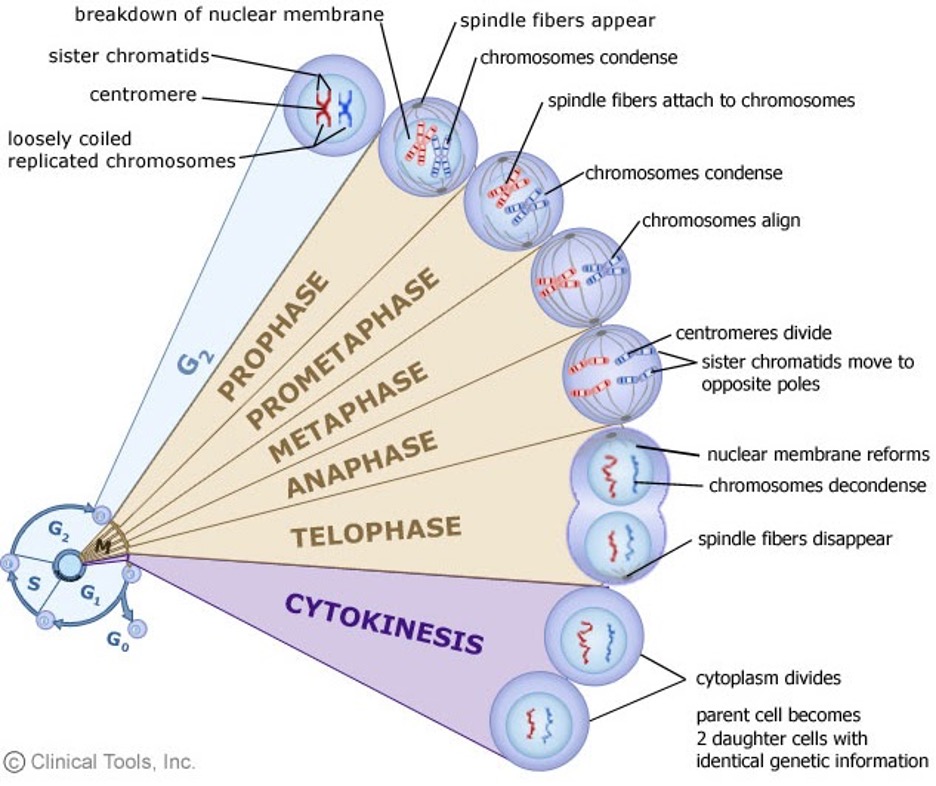
Learn about the first gap phase (G1) of the cell cycle, where cells grow, produce organelles and proteins, and prepare for DNA synthesis. See diagrams, videos, and practice questions on G1 phase. Download scientific diagram | Diagram to illustrate a complete cell cycle progression through four cell cycle phases (G1, S, G2, and M) and three major checkpoints (G1/S, G2/M, and SAC). M phase Interphase steps are the first gap phase (G 1), the synthesis phase (S), and the second gap phase (G 2). Cells divide during mitosis (M). The final step of mitosis, or the following step (depending on your source) is cytokinesis. Cytokinesis is the division of the cell's cytoplasm, which forms two new cells. Some cells exit the cycle and

Khan Academy Biology Diagrams
The following points highlight the four major phases of the cell cycle. The phases are: 1. G 1 (gap1) phase 2. S (synthesis) phase 3. G 2 (gap 2) phase 4. M (mitosis) phase. Cell Cycle: Phase # 1. G 1 Phase: . The G 1 phase is set in immediately after the cell division. It is characterised by a change in the chromosome from the condensed mitotic state to the more extended interphase state and

G 1 Phase. The first stage of interphase is called the G 1 phase, or first gap, because little change is visible. However, during the G 1 stage, the cell is quite active at the biochemical level. The cell is accumulating the building blocks of chromosomal DNA and the associated proteins, as well as accumulating enough energy reserves to complete the task of replicating each chromosome in the

Interphase: Stages, Cell cycle, Diagram, Video Biology Diagrams
Most of these cells are capable of re-entering the cell cycle at the G1 phase should the need ever arise. Nerve cells do not normally regenerate; they remain in stasis. During the G1 phase, cells accomplish most of their growth. They get bigger in size and make proteins and organelles needed for normal functions of DNA synthesis.
